Category Archives: Interview

Emancipator [interview] talks new album, ‘Dusk til Dawn,’ and US tour

Date: Jan 21, 2013 (Monday)

By: Jake Krzeczowski

The idea of a “model” in the music industry is all but gone. Some still traverse the traditional route, but for many contemporary artists there are many more options. No one knows this better than Doug Appling, better known as electronic wunderkind Emancipator.

EmancipatorBefore hitting it big in the States, Emancipator became a phenom overseas—most notably in Japan—at the age of nineteen riding a wave of eagerness for his unique blend of instrumentation that includes rousing performances on the violin by Illya Goldberg. The young artist moved to and performed in Japan, keeping a keen eye on what was happening back in the states before taking North America by storm in late 2009 and early 2010.

TheUntz.com was able to catch up with the Emancipator before his January 19 date at the Bottom Lounge in Chicago.

How’s touring life?

The tour’s going great; we just had our first date at Canopy Club in Champaign, and we’re just excited for the next five weeks—and I’m excited at least to be bringing this new album out on tour.

Anything new in store for the tour and live performance?

I have these songs that I’ve been working on all winter that I can wait to share with everyone, and there’s new production with a new video rig which is pretty dope. They bought us a projector last month to make these triangle panels.

You’re known for a really lush stage show. How much live instrumentation goes into one of your performances?

These shows feature me and Illya playing onstage, I’m not bringing any instruments myself but we’ll still have some musical surprises for you guys.

Your sound has matured and evolved so much over the course of your very short career. What was your process in developing your unique sound?

Well I spent a lot of time as a new producer just on trial and error so I just remember playing a song and creating loops from scratch, that’s kind of how I made my signature sound and I try to teach myself all along the way. It’s kind of funny because I consider myself an electronic musician but a lot of people may hear my music and don’t think it’s electronic music because it doesn’t necessarily mesh with what’s popular. I arrived here because I had this background in classical music and folk music which unfortunately don’t feature a lot of drums. At some point I fell in love with the drum kit and started playing it and eventually meshed these two styles into one.

What is that classical music background of which you spoke?

Violin was the first instrument when I was four and I played that for eight years before I got more into drums and guitar, bass and other instruments too. Currently in my studio I have a synth, bunch of guitars, mandolin, banjo, kalimba, flute; just a lot of instruments to record and sample and produce them electronically. That’s kind of how I get my unique sound, I like to take acoustic instruments and lend them to electronic production.

Can you tell us about your experiences in Japan?

I think it was great to be able to get that experience early on. For my career, I have a good foundation going to be able to let this music grow. It was really thrilling to be able to dive right in to a place like Japan, halfway across the world and have a following there so it’s been an inspiration and a motivation all along the way.

How much did that experience prepare you for America?

It’s funny, my first show in Japan was at the Rolling Stone Cafe and I thought that was a big deal for me at the time and at the same time my first show in the US was opening for Bonobo’s live band at one of the biggest venues in Portland so even here I kind of feel like I dove right in. I see the arenas getting better so I think I’m just constantly growing and adapting to what the situation is. I don’t feel like I’ve made it but at the same time I don’t feel like I’ve learned everything I can and I’m not bored of it yet so it’s still fresh.

Where do you see yourself fitting into the larger framework of electronic music?

It depends on where you think it’s at right now; it’s a lot of different places. I think it’s getting so popular that people are beginning to discern between the genres moreso, not like ten years ago when you said you made beats people assumed you meant techno, people actually know about this stuff. I think it’s going to come around full circle and you’re going to start seeing more fusion bands of electronica mixed with instruments which has been popular in our scene for awhile but I think you’ll see more and more of that.

For those who have never experience a live Emancipator show, what can they expect?

It’s all about setting the vibe for this kind of music; expect some dope beats I guess. It’s not too in your face, we just try to keep it clean and evoke some emotions.

Any big plans for 2013?

A year from now I’d like to be moving in a positive way with my music, just like this year but hopefully with a lot of new material under my belt. We’re looking forward to getting on the festival scene and whatnot, it should be a good year.

[Interview] RH First Look: Alex Wiley

Alex Wiley

–words and interview by Jake Krzeczowski. (Originally Appeared for Ruby Hornet)

Alex Wiley has been working hard lately. The Southside MC has been busy for the better part of 2012 garnering followers through a steady flow of videos and songs online and collaborations with Kembe X and a host of other Chicago artists. Wiley is now looking to drop his own solo project, one that has gone through several changes throughout the last few months.  What originally started as an EP under the name Village Up, has transformed several times during endless recording at SoundScape Studios, where I recent met and spoke with the budding emcee. To be sure, Wiley was due for a nap. Luckily, I was able to catch him just before he curled up on the couch, exhausted from a long day.

That Wiley sleeps at all may be the most surprising thing. The high-energy emcee can be found around town rapping in a Santa suit like he did onstage at Chance The Rapper’s AcidRap Live show at The Metro November 23, or chopping up philosophies on the intricacies of the perfect taco bar, which he has plans to unveil somewhere in the near future. A glance at Wiley’s robust Twitter feed could make anyone wonder if the kid sleeps at all. Since releasing #MoPurp with Chance and Kembe earlier this year, a video for which has garnered over 75,000 YouTube views in just under six months, Wiley has set about making his mark on the Chicago scene and beyond and is nearing the release of his debut project, Club Wiley, which has spanned almost a full year of his progression and is set to drop early 2013 via the indie label, Closed Sessions.

Alex Wiley
Wiley at SoundScape Studios


RubyHornet: How did all this get started for you?

Alex Wiley: My friend Kembe was rapping and shit, and I used to go to the studio with him and we started making these joke songs whenever he was done recording what he had written. We would just call it Swag Village because we just made really dumb songs and put them on Facebook. I just kept doing that and just started rapping over old “Electric Relaxation” and Nas beats. It was just like a weird progression, it was really slow. When Kembe’s mixtape was about to come out, this kid Genesis was harassing like every blogger with it and it found it’s way to Alex at RubyHornet and Andrew at FakeShore first. Once we started getting local blog posts, it just progressed and my friend Calez got on 2DopeBoyz and then we did a song and that went up, and then all of a sudden people were kinda taking us seriously as rappers.

RubyHornet:  What’s the transition like, going from another kid to being taken seriously in Hip Hop?

Alex Wiley: I dropped out of school at like 17, and I used to intern at a couple boutiques around town and that was probably what I was going to do for the time being, working at some little store. Then I just got to rapping, and it was cool and once I started doing it I just really, really like doing it.

RubyHornet: With everyone coming out of Chicago, how do you stay different?

Alex Wiley:  I don’t know, I haven’t really thought about it a whole lot to be honest. I think me and my friends have just been in a good situation and we are just ourselves, and get good enough feedback to where we can keep doing it.  I don’t think our particular side of the Chicago scene has a whole lot of competition and shit going on. I think everyone’s just themselves and people will fuck with it, or they won’t so much.

RubyHornet: Do you feel fortunate to be part of the rising scene in Chicago?

Alex Wiley: This is amazing. I mean, there are people who have been doing it way longer and have way more material out that are still trying to put it all together.  I just feel like I’m in a good situation with local people that I fuck with, but that we can still get the job done on a non-local level. I think it’s cool, I do feel fortunate to just be able to come by and be in the studio like this and work regularly.

RubyHornet: What do you credit that to?

Alex Wiley: Man, I don’t know. I’m just thinking how I got to a point where a label would even want to fuck with me. It doesn’t make a whole lot of sense to be honest. I mean it’s cool, I’m just fortunate to be where I’m at. I feel like it’s on me now, you know? It’s not going to be where I didn’t make it because my situation was fucked up, it’ll be because people don’t really like my music, but I don’t really see that being the case.

RubyHornet: Do you feel any pressure from that?

Alex Wiley: I haven’t had the experience of putting something out where people were just like “this is terrible.” So I don’t know, I feel like I can just do what I want to do, and people are going to fuck with me on some level.  yeah, I don’t think so.

RubyHornet: What’s the relationship like with SaveMoney and Chance and those guys?

Alex Wiley:  I went to grammar school with Chance, so I knew him since I was like five and then went to high school with most of the rest of them. So I’ve just known them for awhile, I have songs with a few of them and I fuck with them.

RubyHornet: How big was it for you to get on #10Day?

Wiley and Chance The Rapper - #MoPurp
Wiley and Chance The Rapper – #MoPurp

Alex Wiley: I wanted to be on it just because I knew how good it was going to be. I don’t think any of us knew it was going to crack the way it did. I had heard a couple records on the album and had been sort of subliminally asking Chance to be on it for awhile. When he came to the studio to do “MoPurp” and this other song, “Spaceship”, we did both of those in one night. He played me a couple records and I was like, I guess it wasn’t so subliminal, I just asked him, but jokingly because it was still his decision. He called me like three weeks before 10Day was out basically and was like “I want you to add a verse to ‘Windows’” because “Windows” was already out and he said he wanted me to add a verse to it and give it a little more bounce. So we just did that, and I think it came out cool. That tape, I think, is like a Chicago classic.

RubyHornet: Tell me a little about your label situation with Closed Sessions.

Alex Wiley: Man, it’s cool. I just think what we have in store is cool, like our plan for this shit, just where we’re trying to go. I think it’s just going to be very interesting to watch. If we do it right, and I think we will, I think it’ll be something to really watch because I think we’ll be getting at this shit that only major artists get at and still be doing it our way while still keeping it indie.

RubyHornet: What does Chicago mean to you?

Alex Wiley: I don’t want to leave. I feel like other rappers want to get rich and move to LA or some shit, but I really like it here. I think you can hear it in my music that I’m from Chicago and this is what I’m about. I feel like Chicago, all the people that are hot here, you can just hear they’re from Chicago, they’re popping because they bring that Chicago shit.

RubyHornet: What do you want listeners to take away from an Alex Wiley record?

Alex Wiley: I want them to just inherently like it as a song. I’m not trying to make music that’s preachy or making people think too deeply. I just want people to hear it and like it and just be pleasing to the ear. I just want people to like it and fuck with it. I just want people to feel it.

RubyHornet: What can we expect from Alex Wiley moving into the end of 2012 and beginning of 2013?

Alex Wiley: Just like a barrage of shit coming in January. We got videos, several more singles, it’s just a whole bunch of shit. We’ve been saving records for a long time. People think that because I’ve only dropped a couple songs in the past couple months that I haven’t been recording, but I’ve been recording a lot of shit for the coming weeks. I think it’ll be a good gauge of whether people will fuck with my tape too, because a lot of these songs didn’t quite make the project but they still kind of had that sound. I’m really eager to see if people fuck with it, I think they will but you never know what happens.

Southern Rapper Yelawolf Sheds The Labels

By Jake Krzeczowski

When Alabama-born hip-hop artist Yelawolf (Michael Wayne Atha) brings his Slumerican Tour to the House of Blues October 25, it is the culmination of his journey through the ranks.

While many fans may know him from his somewhat recent association with Eminem and his 2011 commercial release Radioactive, Yelawolf is well-traveled in the hip-hop game and knows nothing matters more than doing things his own way.

The 32-year-old Interscope/Shady signee has seen the good and bad of the music world since he first broke into the scene with a 2005 independent debut album Creek Water that eventually spawned into a short-lived deal with Columbia Records.

“That deal didn’t last long at all,” said Yelawolf. “The most valuable lesson I learned is
that without your team, without an operating group of people working directly for you, a
label is useless.”

Following the break up, the member of the 2011 XXL Freshman class reassessed his
situation and says he focused on securing a strong team around him, staying away from
major labels.

The union with Interscope/Shady came on the heels of a return to the streets, which saw
him release the critically acclaimed Trunk Muzik mixtape.

He felt comfortable with Interscope CEO Jimmy Iavoarone and went to the studio to
record Radioactive with a different approach in mind

“Radioactive was like [the label’s] shot to step in on my music,” said Yelawolf. “That door is closed. That room doesn’t exist anymore, much less the door. Now it’s about getting back to what I’ve been doing lately, my freedom.”

Radioactive, which he described as “a total mess,” debuted at No. 27 on the Billboard 200 and sold just over 40,000 copies in the first week. Although he is happy with Shady’s sub-family, the avid skateboarder felt as though he lost creative control with the project and has looked to change his approach from here on out.

“I’m gaining back my creative control. There’s nothing about me that changed I just let people share my creative space,” said Yelawolf. “The ‘original Yelawolf,’ that’s still me, I didn’t ever sell out.”

Following his show in Chicago, Yelawolf has plans to release an EP collaboration with Blink-182 drummer Travis Barker titled Psycho White in November, along with several other projects still in the works.

Yelawolf has learned a lot over the years from his dealings in the music industry, but stresses that he’s nowhere near finished.

“I’m still growing as an artist and only see myself getting better,” said Yelawolf. “I’m never waiting for something to happen. I just always keep my head up and stay on the road.”

Grimes is making her mark on electronic pop

By Jake Kreczowski October 22, 2012 9:16PM
Originally Appeared For Chicago Sun-Times

Things have been going well lately for Clare Boucher.

The past year has seen the Canadian-born artist, better known as Grimes, rise to the top of the contemporary electronic music scene through her specific style she refers to as “experimental pop music.”

Grimes created waves in the music world on the heels of her critically acclaimed 2012 release “Visions.” She visits Metro on Tuesday to share some of that success with Chicago.

In the computer-dominated world of electronic music, Grimes is a refreshing change of pace, forgoing more advanced recording software, opting to produce “Visions” entirely on Garageband, the free music production software provided on every Mac.

It wasn’t an attempt at irony, simply an artist going with what she knows. “I had only been making music for about a year,” she said. “I literally didn’t know how to use anything else. [Garageband] was there, it was free.”

Thriftiness seems to be a big part of Grimes’ decision-making. She moved to Montreal from her native Vancouver in 2006 not so much for the rising music scene, but simply because it was a practical situation for her.

“The cost of living is extremely cheap and that helped me,” said Boucher. “You can get a nice apartment where you can be loud and no one complains.”

The creative space allowed Boucher to cultivate her unique sound that she describes as not fitting in any one particular genre.

Known for her colorful production paired with trance-like vocals, Grimes got a taste of the electronic dance music scene this summer when Grammy-winning artist Skrillex invited her to join him on the Full Flex Express tour, a weeklong train tour across Canada.

Grimes found herself among the likes of EDM headliners such as Diplo and Pretty Lights, and, as one of the only women on the train, opening for them to audiences she wasn’t much used to.

“A lot of my shows before that, the crowd was very withdrawn,” she said, “and it was fun to perform for a bunch of teenagers just having a good time.”

While her live show likely won’t involve spaceships and glowstick cannons like a Skrillex concert, he did help her realize an important aspect of the industry.

“From talking to Sonny [Skrillex] I found that if you’re willing to take charge of a situation you have a lot of power over how you’re perceived and how things are done,” said Boucher. “It inspired me to say, ‘Screw it, I’m taking over everything. I have the power to make this how I want to be.’ ”


Jake Kreczowski is a local free-lance writer.

Rockie Fresh returns to Chicago with Saturday show at Metro

By Jake Krzeczowski October 19, 2012 5:34PM

Originally appeared for Chicago Sun-Times

Updated: October 19, 2012 7:37PM

Chicago is quickly establishing itself as the nirvana for rising hip-hop artists.

Over the past year or so Chicago has found itself firmly on the front page of hip-hop with a slew of new artists putting the city on the map, causing one music exec to compare it to Seattle’s grunge scene in the ’90s.

The latest to emerge from the Second City’s streets is Donald Pullen, a k a Rockie Fresh. He earned his stage name during lunch time freestyle battles at Homewood-Flossmor High School and recently inked a deal with Rick Ross’ Maybach Music Group.

On Saturday, Fresh, 21, returns home to play to Metro on his Electric Highway tour.

“The first concert I ever went to was Chester French and Hollywood Holt at the Metro,” Fresh said. “I always dreamed of filling it out, so the opportunity to do that is pretty cool and I kind of went all out for it.”

When he says all out, he’s not joking.

Opening for Rockie Fresh at the Metro is fellow Chicagoan and Epic Records signee King Louie, as well as up-and-comer Casey Veggies.

He carved a niche in the hip-hop world by incorporating different influences from outside it. He has worked on projects with Joel and Benji Madden of Good Charlotte, Patrick Stump of Fall Out Boy, sampled electronic duo SBTRKT on his last mixtape “Driving 88 and wants to work with John Mayer.

When asked about his wide range of influences, Rockie says it’s just who he is.

“The thing is that the [alternative influence] is really just what I like,” Fresh said. “It’s just the aspect of the music I appreciated before I started to rap. I feel like it’s all a part of my sound and it’s something I value a lot.”

Chicago hip-hop has been in the news lately for negative reasons, often tied to the violence that has plagued the city this year..

While he is conscious of the problems, Fresh doesn’t feel the burden lies with the hip-hop artists coming out of the city.

“I feel like there’s a lot more positive aspects that could be highlighted and highlighting the negatives acts as promotion,” said Fresh. “I feel as though I lead by example.”

Expect Fresh to continue his example as his first release, Electric Highway, his first release under Maybach Music, and continues to extend his place in the world of hip-hop in and out of his hometown.

“Chicago means a lot to me because it’s where my family, friends and inspiration come from. It’s good to be back,” Fresh said. “I plan to keep making music; it’s going to be a great ride.”

Jake Krzeczowski is a local free-lance writer.

The White Panda mashes up at House of Blues Sunday

BY Jake Krzeczowski October 5, 2012 3:20PM

Originally Appeared at Chicago Sun-Times
Updated: October 7, 2012 10:19AM

Tom Evans and Dan Griffith both expected to be working “normal” jobs by now.

Evans, aka Procrast, a Northwestern University graduate had been eyeing a gig in consulting in Chicago while Griffith, aka DJ Griffi, an electrical engineering major from USC, had toyed with the idea of spending his days in a Silicon Valley lab.

Instead, the two childhood friends will don LED-powered panda masks and take the stage at the House of Blues Sunday as part of their “Mating Season” tour.

What started as a way to avoid homework and post songs for friends evolved into a joint venture out of Los Angeles, which they launched under the banner of The White Panda.

“We came up with the name just thinking of ideas one day,” said Griffith, who claims to have nearly 500 different panda masks in his closet. “The whole panda image was one of the best decisions we’ve ever made for the group.”

The panda quips don’t stop there. Music videos by the duo feature pandas onstage, pandas in the crowd and in one of their latest videos on YouTube a panda recreates the popular “Gangnam Style” dance moves. 

At a time when the rise of Electric Dance Music (EDM) has taken over the pop market, many DJs have come under fire for simply flipping a switch, playing the music and standing onstage.

The largest incident came when Swedish House Mafia member Steve Angello was seen casually smoking a cigarette while music blasted from the speakers on either side of him, premixed.

“A lot of people are surprised when they leave our shows because the mash-up concept isn’t as much of a novelty as it once was,” said Evans. We bring a lot of energy to our shows and it’s sound and it’s lights, visuals. It’s more than just a track by track mix, we try to get the crowd involved.”

What sets the duo apart is their ability to adequately fill the niche they have carved for themselves since 2008, when the mash-up scene (creating a remix by combining two or more songs) was dominated by Girl Talk..

“We were on of the early artists to make [mash-ups] a little more mainstream,” Griffith said. “We tend to lend ourselves more to the EDM world. That’s one of the reasons we were able to separate ourselves and one of the reasons we remain relevant today.”

While the two may not have forseen the path their music has taken them, there is no hurry to change lanes just yet.

“We’re both pretty studious guys and the fact that we went this directions is kind of crazy at times,” said Evans. “We now have fans who get excited with each new release so we just try to push ourselves and evolve as the music industry evolves.”

Jake Krzeczowski is a local free-lance writer.

Chicago Football Classic bands march to a different beat

By Jake Krzeczowski September 29, 2012 5:02PM

Originally appeared for Chicago Sun-Times

ARTICLE EXTRAS

It’s more than the game.

When Albany State and Kentucky State take to the gridiron Saturday for the annual Chicago Football Classic at Soldier Field, the real contest will be in the stands after the final whistle.

That’s when the Battle of the Bands, with the two nationally known marching bands, begins.

The Sun-Times caught up with Albany State’s drum major, senior music education major James Worthy of Albany, Ga.:

Q. What are you looking forward to this weekend?

A. I’m actually looking forward to coming to Chicago because I’ve never been that far north before. I’m also looking forward to how Chicago responds to our type of music.

Q. How would you describe that type of music?

A. What we try to do is make a concert band. We try to have a really nice, symphonic band and try to put that type of sound on the field so we sound like a marching symphonic band.

Q. What can fans expect?

A. They can expect a band that tries to hype the football team as well as one that tries entertain the crowd.

Q. What separates Albany State from other band?

A. A lot of bands say that being louder is better. But being louder is not always better. We’d always rather have better quality over our opponent. We try to do a lot more musicianship and have a lot more musicality in what we do. Jake Krzeczowski is a local free-lance writer.

Q and A: Matthew Modine

By Jake Krzeczowski

June 4, 2012 9:40AM

Updated: June 4, 2012 10:09AM

Original: Pioneer Press

Actor Matthew Modine was in Glencoe this weekend as part of the Glencoe Grand Prix festivities. We talked to Modine about his efforts to promote bicycling, and his latest work in Hollywood.

What is the mission behind Bicycle For A Day?

I was asked by a group of young global leaders what I would do to help the environment and I said ride a bike. Riding a bike is something that has an immediate positive impact on our community. In addition to that, riding a bike a couple hours a week can reduce a person’s risk of heart attack and stroke by 50%. The goal for Bicycle For A Day is to have a day the whole world only rides bicycles for a day.

What drew you to Glencoe for the event?

Chicago in general has been great for bicycling with all that Mayor Daley did with bike lanes and whatnot. Chicago is definitely one of the leaders in the country for cycling. I had been working in town with an alternative energy program in the area and was offered the chance to take part in the Grand Prix because of my involvement with Bicycle For A Day.

How does Bicycle For A Day give back?

Biomega, a sponsor for BFD had $30,000 worth of returned bikes at their headquarters and offered to donate them to us. I was going to bring them to New York but heard of West Town bikes who give bicycles to kids who can’t afford bikes and teach them how to fix them and maintain them which is a big part of cycling culture, everybody wins.

What can you tell us about The Dark Knight Rises?

Everyone’s talking about The Avengers and I’m sure it’s a very good movie because I haven’t seen it but I’ll tell you that The Dark Knight will kick it’s butt. It’s very dark and tragic and it’s very good. I’m excited about it.

AN AMERICAN EXILE

Verum Magazine, March 2012

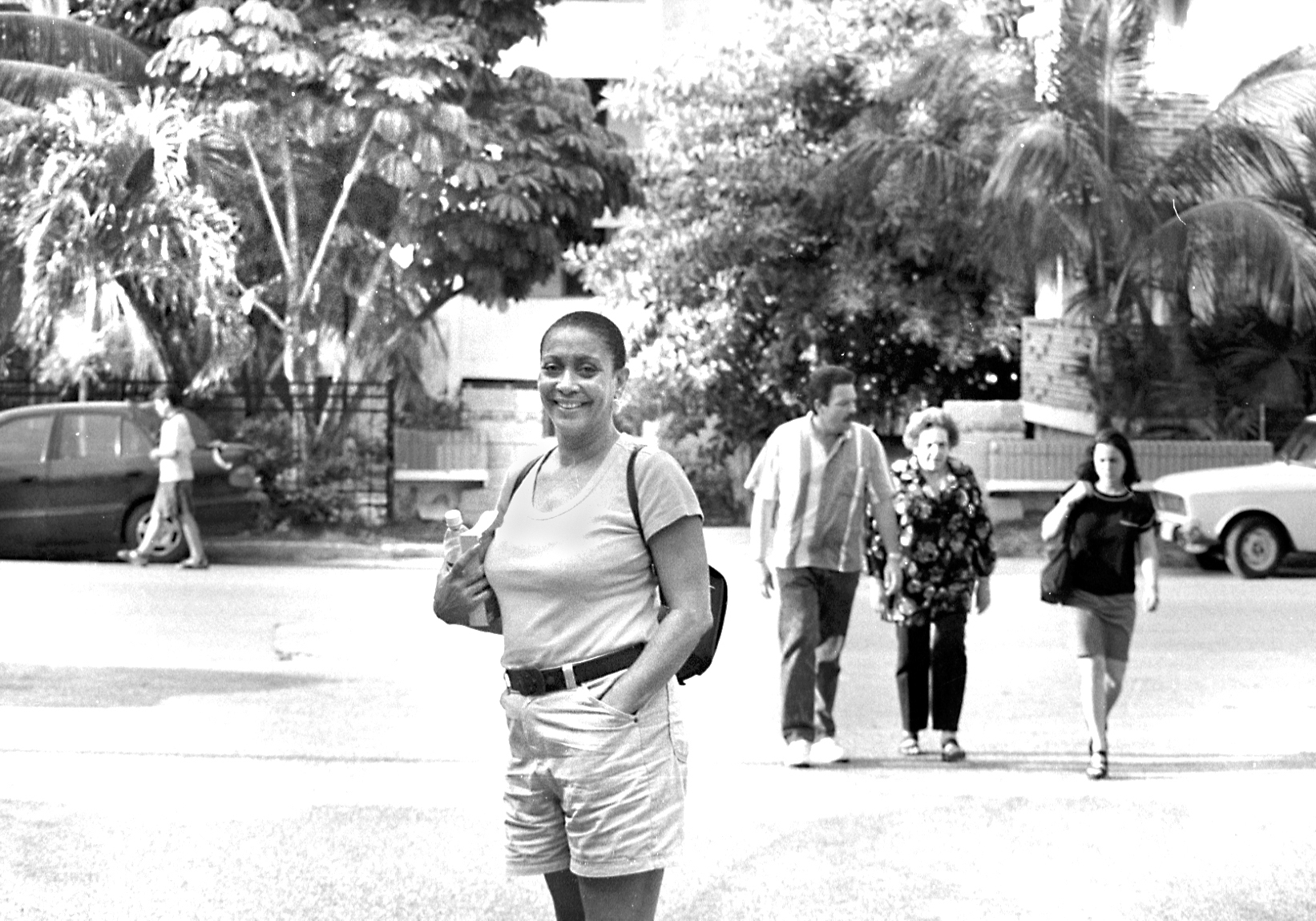
Over winter break this year I was able to go on a two week study abroad writing class to Havana, Cuba. While I was there I was introduced to Nehanda Abiodun, currently living in Cuba under political asylum. After meeting briefly I asked to do an interview and the next day found myself in  on the outskirts of East Havana with just my photographer and a backpack filled with notebooks and cameras. Sitting for three hours in the bright Cuban sun with Nehanda was an unforgettable part of the trip but the story of how she got there in the first place is even more intriguing.

The Revolution Will (Literally) Not Be Televised

Track 1: “And now I’m like a major threat, Cause I remind you of the things you were made to forget” – 2Pac

Somewhere in the U.S., 1989

The monotonous tone of helicopter blades chopping at the brisk late afternoon air snapped her suddenly from intense concentration; “Ok, what will it be?” Nehanda Abiodun stood before her open closet, carefully investigating its contents as the walls closed in from all sides. Knowing full well that her spot on America’s Most Wanted list would warrant a parade of her image across TV stations and newspapers should she be captured, she took her time deciding precisely what to wear. “Something that won’t get dirty easily, something that won’t wrinkle,” she thought to herself, carefully fingering through the hangers. Sirens sounded in the distance.


Havana, Cuba – 2012

Sitting on the creaky red bench attached to one of two tables at Los Pollos, a state-owned fast food chicken bodega in the cluttered public housing section of Havana, Cuba known to us as La Bahia I began to wonder if she would actually show up. Popping a chicken croqueta in my mouth and washing it down with an orange soda I saw her approaching from across the street, trading pleasantries with seemingly everyone who walked by.

Pulling herself away from the crowd Abiodun approached my photographer Louis and myself, wrapping us into a hug that seemed meant for an old friend. Puzzled looks followed her as she embraced the two tank-topped pale Americans. Grabbing three Bucaneros from the bodega, she sat down doling out the take, “Let’s do this,” she said with a crack of the can, a smile crossing her face.

“Besos.”

Nehanda Abiodun, previously known as Cherie Dalton, holds a degree from Columbia University and a host of 32 felonies against her in America. She was third on the FBI Most Wanted list during her heydey in the late 70s for her involvement in the Lincoln Detoxification Center, a drug rehabilitation complex with a revolutionary message. Whether they are all warranted is up for debate. What isn’t however is the revolutionary spirit of the movement that she and her comrades were a part of.


Track 2: “Give the crack to the kids who the hell cares? One less hungry mouth on the welfare.” – 2pac

The phone rang, another interruption in her decision-making process. Carefully, she picked up the receiver without saying a thing. The voice from the other end informed her that police had set up road blocks around her neighborhood, were handing out photos of her asking for information. Muttering a quick thank you, Nehanda put the receiver back.

They were close; moving in.


Three decades ago, at age 30, Abiodun had had enough with community work. Seeing little positive results from her work within the system, along with the killing of a young boy by police in her neighborhood she felt compelled to do more.

“I felt I had to do everything I could to stop things like that from happening,” Abiodun said. “That’s when I decided to go about a more revolutionary path of bringing about human rights and the ending of ‘badisms’ that exist in the United States.”

To be a patient at Lincoln Detox and Acupuncture Clinic you had to take political education classes, do community work,” Abiodun said. “Doing community work, you were no longer a parasite on your community, you’re giving something back and getting a different outlook on yourself”

New York Comptroller Ed Koch, who would later go on to be Mayor and other members of the government had been keeping a keen eye on the center and it’s revolutionary ideals eventually closing Lincoln with a raid of nearly 100 NYPD officers and SWAT team members. The raid occurred at night, with only five or six attendants on duty, none of whom were Abiodun.

Lincoln was overseen by revolutionaries  like Mutulu Shakur and had loose ties to a string of Brink’s truck heists during which several police officers and security guards were harmed or killed. The attempted heists resulted in the jailing of several members of the group, also connected to the Black Liberation Army (BLA).

Stemming from the closing of the center, the attempted heists and the liberation of Assata Shakur in 1979, Abiodun was facing several charges under the Rico Conspiracy Act which deals with being a part of illegal organization for personal gain and had previously only been used in mob cases. She was also implicated in the escape of Assata.

“They say I and others were involved in expropriations of armored trucks, that we were also engaged in the ‘liberation’ of Assata,” Abiodun said. “Personally they say I was involved in the expropriations and aiding and abetting Assata’s liberation.”

The 32 felonies levied against Abiodun, likely a life sentence if tried, are the most of anyone involved in the liberations and “revolutionary” work.


Track 3: The war on drugs is a war on you and me, And yet they say this is the Home of The Free. – 2Pac

It had been eight years since skipping town on the grand jury. Eight years of living out of the public’s eye throughout America and it had come to this. Taking a deep breath she grabbed a pair of dark pants, black shirt and grey sweater. As sirens sounded in the distance, she dressed in a hurry; took a moment to smooth things over in the mirror and soaked in what very well could be her last moments of freedom.

As she put the car into gear and rolled out of the driveway, reversing to the street, she glanced in the rearview mirror, “Here we go,” she said to herself. Dropping the gear from R to D, the car jumped and she turned the corner out of her neighborhood for the last time.

It wasn’t long before what her friend had told her on the phone became reality. Sitting in a long line of cars, she peeked around those in front of her where she saw the black and white of police cars, officers stopping each vehicle with a document in their hands. With a car in front and behind her, a barricade ahead, Nehanda had nowhere to go; slowly inching toward fate.

After the breakup of Lincoln and the subsequent backlash that followed the failed attempt on a Brink’s truck, Nehanda skipped town describing it as “underground”. With a legitimate ID, a job and a home she was well within the reach of American forces but she managed to stay out of their way, for awhile.

She had been called by a Grand Jury to testify against Mutulu, but she refused and went into hiding believing the charges against her and others were bogus.

“At the first trial there was a ledger for all the money that was liberated, robbed, whatever went to do what?” Abiodun said. “To build the clinic, to finance a camp for kids, to help kids with college money. I still have people asking me ‘what happened to the $4.5 million, there must be a stash.’ Well if there is, no one’s told me.”

Speaking to Nehanda about the decades that followed is difficult, highlighted by half sentences, pauses and smiles followed by reminders not to talk about certain things. For obvious reasons, Abiodun is conservative about what she says and does. After all, she spent eight years underground across America. Helped by those sympathetic in the struggle she managed to maintain a semblance of a real life with her children still in New York.


Track 4: “And even to this day they try to get to her, But she’s free with political asylum in Cuba” – Common

As the officer approached her mouth went dry and she swallowed hard to clear her throat, thinking about the hectic schedule of the next couple of days would hold if she were recognized. A rapping on the window broke her reverie, bringing her back to the present. An officer stood outside her window, a similar bored look on his face. She rolled the window down slowly.

“Hello ma’am,” the officer said from behind thick black aviator sunglasses. “Have you seen this woman?”

She reached out and met the officer’s hand at the window,flipping the photo over over in her grip.

Nehanda had expected to see the picture, she had seen it almost everywhere for the better part of a decade: newspapers, magazines; repeatedly on television. This time though, tracing the photo quickly with her eyes she hardly recognized the woman she held in her hands in black and white. She followed the smile on her face to the dread-locked black hair she now wore up in a hat. The photo had been snapped a lifetime ago.

“Never seen her” she said, handing the picture back hoping he wouldn’t notice.

He didn’t.

Feeling herself slowly breathing again she passed by the cars and wooden blockades that made up the stop under the watchful eyes of the other officers before turning the corner and hitting the highway. It was late 1990. A couple months later she would arrive on the shores of Havana, Cuba; leaving the U.S. for good.

If Abiodun thought she had seen struggle in America, her arrival in 1991 in Havana was sure to open her eyes up to more. When asked how she got there she says matter of factly, “I didn’t walk on water.” The year marked the beginning of what Fidel Castro called “the special period” in Cuban history. Following the fall of the Soviet Union the country went through a time of intense economic collapse, felt most harshly by the people. It was normal for condoms to be shredded to mask a lack of cheese on pizzas.

“During the special period, people were just so united. If I had something and you needed it there was no questions of sharing it and vice versa,” she said. “I got used to holding on to things because you never knew when you might need it.”

She had arrived on the island fresh from her own revolution and eager to continue her support from abroad. The Cuban government granting her political asylum, however, had other plans. They ordered her to stop, to relax, allowing Nehanda the first semblance of peace she had felt in almost a decade of living underground.

“I’m really, really grateful to (the Cuban government) for insisting that I take a rest because I had spent eight years underground and even though I thought I was normal, I wasn’t. It had psychological repercussions, being underground all that time.”

Abiodun speaks of the pain she felt leaving her children behind initially, not being able to see friends or family members and a pesky habit of waking up in the middle of the night.

Life outside of the United States hasn’t been easy. Cuba, the only country listed as “self-sustaining” by the World Wildlife Foundation has it’s downsides. While she is appreciative of everything the people and government have done for her, there are times she feels it weighing on her.

“I’m comfortable,” Abiodun said. “I feel safe here. I have stress but it’s not the same stress if I was back in New York right now. I don’t worry about being put out of my house, about not eating.”

Politics now on the backburner, Abiodun had a chance to try something new. She began working in communities throughout Havana, blending into her community, picking up spanish word by word. It wasn’t long before her reputation preceded her and she was sought out.

Those looking for Abiodun however weren’t FBI operatives or military officials, but young hip-hop acts in Cuba looking for insight to the turbulent sixties and seventies in America; they wanted to hear about the struggle.

“I’m spoiled,” Abiodun said. “The youth that I see for the most part are very progressive, politically aware, involved in some sort of movement.”

The genre of hip-hop, mascaraded in America with showers of dollar bills, platinum grills and twenty-inch rims has taken on a different role in the land of socialism. It is a political tool of sorts in a country where there are few. Lyrics often work as a commentary on the government, confronting, within bounds, the issues they face.

Before long, Nehanda was tending to groups of Cuban rappers, often nearly a dozen at a time sitting on the floor of her apartment, looking to her for inspiration that is impossible to ignore when she speaks of listening to Malcolm X live or standing on protest lines at the age of ten.

Track 5: “In case you don’t know, I ride for Mutulu like I ride for Geronimo” – 2pac

During her time in New York during her community and revolutionary work there she came to be friends with a woman named Afeni Shakur, future member of famed American rap artist Tupac Shakur. For the first thirteen years of his life Tupac grew up playing and spending time with Nehanda’s children.

“Tupac was a year older than my son, but they played together like most kids that age.”

Abiodun was among those who impressed a revolutionary, socially aware spirit on the young Tupac Shakur was first impressed upon him. That politically aware mindset has carried over to her teachings amongst the Cuban hip-hop youth. Many come to hear the teachings she learned through time spent with the likes of Mutulu and Assata and the do it yourself mindset of their resistance to perceived biases around them.

She was first introduced to the hip-hop community by Dana Kaplan, then a young American college student studying at the University of Havana.

“While I was there I kept getting all these questions about the civil rights movement and racial justice issues in the U.S.,” Kaplan said. “Nehanda has a great historical perspective, I made sure they could have direct access to her, eventually she was hosting discussion groups in her apartment.”

Around the turn of the millennium the Cuban government declared hip-hop “an authentic expression of Cuban Culture,” and Fidel Castro called it “the vanguard of the Revolution.” The art form had jumped American borders and the locals were hungry.

Abiodun obliged,  bringing the Black August Hip Hop festival to Havana in 1999 along with the Malcolm X Grassroots Movement of the U.S. The festival has hosted the likes of Mos Def, Common and The Roots. Today Black August is one of the most important hip-hop organizations in the country.

Track 6: “It ain’t easy, being me. Will I see the penitentiary or will I stay free” – 2pac

Life in Cuba isn’t perfect. While citizens don’t worry for basic necessities, luxuries are seldom. The government is nearing a change as the Castro brothers age every day and it is the Cuban hip-hop groups that have increasingly looked to be the voice of the youth.

Since she was ten years old Nehanda Abiodun has sought to stand up for the change she feels is right for the world. She has sacrificed her family and her freedom but the only thing she regrets is not having done things a bit smarter. She is at peace with her life but of course would jump at the chance to return to America without jail time.

Whether she is lending her teachings to the young people of Cuba or fighting for equality in “The Land of the Free,” Abiodun has never stopped pushing for what she believes in as others forced her to adapt.

“When I meet my ancestors I want to be able to look them in the eye and say ‘yes I made a lot of mistakes, but I tried my best. That’s what I really want.”

By Jake Krzeczowski

(scenes in italics early on are not necessarily how things happened)

INTERVIEW WITH AN HORSE’S KATE COOPER

Verum Magazine, February 2012

Kate Cooper and Damon Cox of An Horse

Verum had a chance to catch up with An Horse’s Kate Cooper. who with Damon Cox make up the band An Horse, while she was in the studio working on new material. The duo sets out on tour March 9 and visits the Blue Moose March 11. An abbreviated version of this article ran in the VMix section of the current issue of Verum.

Verum: Is this a typical tour for you?

Kate: This one is the perfect size. For me, it all feels kind of overwhelming, I have a month of dates and five dates in Australia which is totally manageable. In the past we’ve done two months in the states and a few weeks in Europe so it is just much easier to manage. It’s also one of our last tours on this record which is cool.

Verum: Are you currently working on new material?

Kate: That’s what I’m supposed to be doing instead of Googling coffee shops (laughs).  I’m actually set up in front of my computer and watching it open and it’s all set up and instead of doing what I’m meant to be doing I’m reading about coffee.

Verum: Is there a direction with the new album?

Kate:  We’re still in the early stages so I’m just writing, writing, writing. I have an albums worth of material but I think that we want to have, before we can contemplate recording, we need four or five albums worth of material. I’ve got some work to do, which I’m currently not doing. (laughs)

Verum: What can we expect from an An Horse show?

KateSerious rock and roll. It’ll be a bit longer, a few covers maybe thrown in. We’re not playing anything new just yet, can’t do that but we expect to have a lot of fun.

VerumHow did An Horse come to be?

KateDamon and I are from Brisbane, Australia originally and we worked in a record store there . He worked there a couple of years before me and I got the job there later. I didn’t know Damon well, I knew of him but we hadn’t met officially. I worked at the store for a couple of years and we’d go out after work and drink and talk about music and then we’d go to work and drink coffee and talk about music so we had this simple and amazing friendship. We understood each other and joked about starting this band. He used to get off work and tell me to pretend that we were on tour in America which at the time seemed to be the furthest thing from reality for us. We started jamming together and liked it and kept doing it. It’s the most unintentional band that ever came into being. We didn’t intentionally do anything.

Verum: Are you surprised at all by your success?

KateWell I mean success is an interesting term and there’s lots of levels to it. On one hand what we’re doing is crazy and amazing and very successful and on the other hand other bands are far more successful so I mean I’m still amazed I get to do this and we get to play with all these amazing people and bands, yeah I’m blown away. It’s just about time and hard work.

VerumWhat’s the writing process like?

Kate: I don’t really try to achieve anything. It just happens so I guess a lot of that record was just about a lot of the things that were going on in my life which is basically the way I approach it. I don’t really try to do anything because I think if I think about it too much it would freak me out. I do what I do. I would prefer to just be a poet but you can’t make any money as a poet (laughs).

Verum: What’s next for An Horse

KateI think mainly the focus is to knuckle down and write but I could be wrong. I’m a bit out of the loop because I ask to be kept out of the loop, don’t worry too much or freak myself out about travel schedules and whatnot. But I actually have no idea at this point which makes me think that we’ll just have to wait and see. We’ll wrap this tour up, go to Australia and do that and then get down to writing, try to make a new record at some point. I’d like to have a new album done this year.